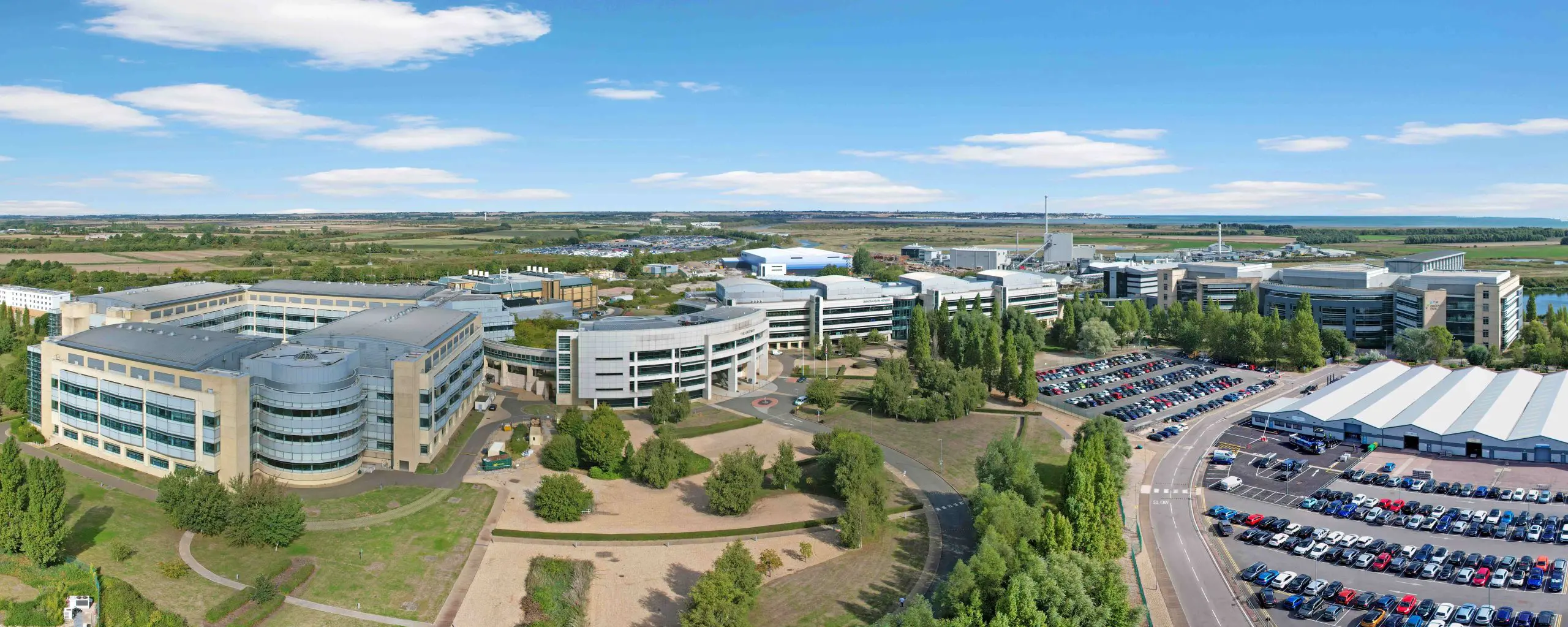
A significant milestone for both Kent and the wider sustainable aviation sector was marked on 24 April 2026 with the opening of the world’s first waste plastics to Sustainable Aviation Fuel (SAF) pilot facility. Housed within a new Sustainability Innovation Centre at Discovery Park in Sandwich, the facility is operated by Clean Planet Technologies and represents a tangible step towards decarbonising the global aviation industry while tackling the plastic waste crisis simultaneously.
Turning a problem into a premium product
The UK generates five million tonnes of waste plastics each year, of which 80%, including carrier bags and food packaging film, cannot be recycled through conventional means. At the same time, the world’s commercial aircraft consume between seven and eight million barrels of jet fuel daily, accounting for some 7–8% of total global daily oil demand. Clean Planet Technologies has developed a patented process that addresses both challenges at once.
“Every day, around 100,000 commercial flights operate globally while approximately 30,000 tonnes of plastic enters the ocean. Our pilot facility will demonstrate this waste can be turned into a premium product with a quantifiable commercial demand, as well as reducing the lifecycle carbon footprint of the aviation industry.”
Dr Andrew Odjo — CEO, Clean Planet Technologies
The process begins by heating waste plastic through a chemical reaction to produce a liquid, melting rather than burning the material, which is then treated using the company’s patented technology to remove impurities and yield SAF that meets stringent commercial aviation specifications. Independent analysis shows the process cuts lifecycle greenhouse gas emissions by more than 70% compared to traditional fossil jet fuel.
A step-by-step breakthrough
The Sustainability Innovation Centre integrates several stages into a single controlled system, designed to transform hard-to-recycle plastics through to aviation-ready fuel. The facility’s largest pyrolysis unit is capable of processing up to one tonne of plastic per day.
The process begins by heating waste plastic through a chemical reaction to produce a liquid, melting rather than burning the material, which is then treated using the company’s patented technology to remove impurities and yield SAF that meets stringent commercial aviation specifications. Independent analysis shows the process cuts lifecycle greenhouse gas emissions by more than 70% compared to traditional fossil jet fuel.
A step-by-step breakthrough
The Sustainability Innovation Centre integrates several stages into a single controlled system, designed to transform hard-to-recycle plastics through to aviation-ready fuel. The facility’s largest pyrolysis unit is capable of processing up to one tonne of plastic per day.
Shredding – Waste plastics are pre-processed and reduced to a uniform size for consistent feed.
Pyrolysis – In an oxygen-free environment, plastics are thermocatalytically converted into a synthetic crude oil — melted rather than burned.
Purification – Impurities and contaminants are removed from the synthetic crude oil.
Distillation – The pyrolysis oil is separated into relevant fractions and optimised for upgrading into higher-value fuels.
Hydroprocessing – Clean Planet Technologies’ patented system uses hydrogen to further remove impurities and transform the product to meet stringent SAF specifications.
SAF product – The resulting ultra-clean, ultra-low sulphur fuel is sent for testing, blending and evaluation through the ASTM qualification pathway.
Crucially, all four core process technologies, pyrolysis, purification, distillation and hydroprocessing, are already proven independently at commercial scale, meaning the path to scaling up the integrated process is well within reach.
Government backing and industry qualification
The facility has already secured financial support from the Department for Transport-funded UK SAF Clearing House, and has been designed to support fuel and feedstock testing, validation and progression through the American Society for Testing and Materials (ASTM) qualification process, the internationally recognised pathway to certified aviation fuel status.
“Kent is becoming a real hub for world-leading sustainable innovation, and this facility is a powerful demonstration of what’s possible when cutting-edge science meets the right environment to grow. The Sustainability Innovation Centre is a landmark moment — for Clean Planet Technologies, for Kent, and for the future of sustainable aviation.” Chris Broom — Head of Business Development, Discovery Park
Clean Planet Group was founded in 2018 by Dr Andrew Odjo, Adel Louertatani, Bertie Stephens and Fernando Diamond. CEO Bertie Stephens described the facility as addressing two strategic challenges simultaneously: plastic waste management and aviation decarbonisation. He highlighted that converting non-recyclable materials that would otherwise go to landfill or incineration into low-carbon aviation fuel both supports circular economy objectives and positions the UK as a global leader in the emerging waste-plastics-to-SAF sector, clearing a path to commercial-scale plants later this decade.